


My Cat Sort:Pet Puzzle
5.06.00 Reviews
App Specs
- Version
- 1.0.7
- Updated On
- License
- Free
- Downloads
- 10,000+
- Developer
- ziyaokeji
- Categories
- Trivia
- Platform
- Android
Screenshots
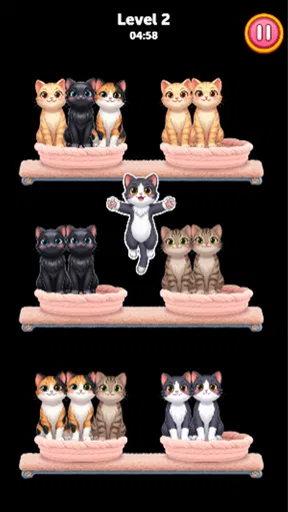
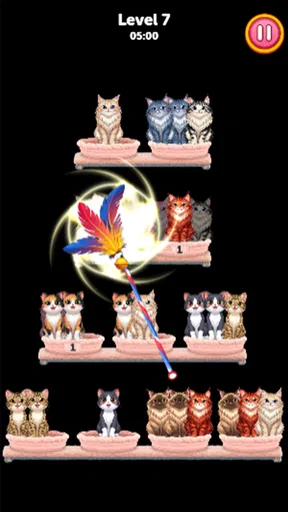
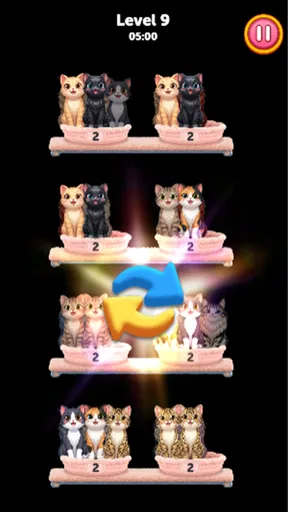
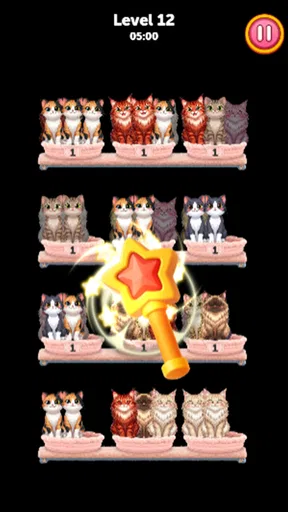
 Analysis by AppCompare
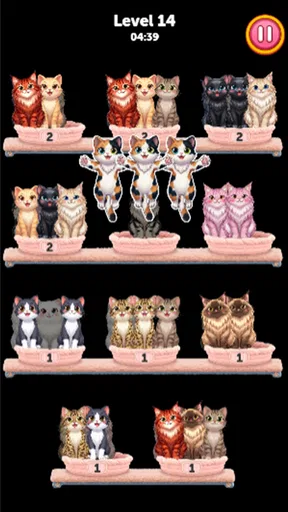
I spent time with My Cat Sort: Pet Puzzle as a light trivia-style game built around arranging and grooming adorable cats. Its central idea is easy to understand: the cute presentation draws you in, while each grooming task asks you to think about order, placement, and the next sensible move. It is the kind of game I can imagine opening for a short break rather than setting aside an entire evening for a long session.
That combination gives it a particular appeal. This is not presented as a serious knowledge quiz, and it does not ask me to memorize facts before playing. Instead, the trivia label sits beside a logic-and-strategy experience in which the visual theme makes the puzzle feel friendlier. The result is approachable for casual players, especially anyone who prefers a soft animal setting to a competitive or overly intense game.
How the cat-grooming puzzles feel in everyday play
The first thing I noticed is how much the cat theme changes the mood of the puzzle. Sorting tasks can feel dry when they are represented by plain blocks, colors, or numbered pieces. Here, the grooming context gives the actions a clearer personality. I am not simply moving objects around a board; I am trying to make a sensible sequence while taking care of a collection of charming pets.
The strategic layer matters because a careless move can make the next step less convenient. I found myself looking beyond the immediate action and considering which cat should be handled first, which space should remain available, and whether a move would leave a useful option for later. That makes the game more satisfying than a purely decorative pet app. The cats may be the reason to start, but the ordering decisions are what keep the activity engaging.
A useful way to approach a new puzzle is to pause before touching anything. I recommend scanning the whole arrangement, identifying the most restricted pieces, and protecting open spaces instead of filling them immediately. This small habit is more valuable here than rushing toward the first obvious match. It also makes the game feel more like a compact logic exercise than a sequence of random taps.
Another practical tip is to treat every move as part of a chain. If one grooming action opens access to another cat, that second action may be more important than the first reward on screen. I had better results when I asked, “What will this move unlock?” rather than simply choosing the most attractive cat at the moment. That approach is especially helpful when the board begins to look crowded.
The visual theme also makes the game suitable for shared, low-pressure play. I can see a parent handing the phone to a child and discussing possible moves, or two people solving a difficult arrangement together without needing a complicated explanation. Because the content rating is Everyone, the presentation is positioned for a broad audience rather than a narrowly adult one. That does not mean every player will enjoy the same pace, but it does make the concept easy to introduce.
Worth Reading Before You Choose

Flipboard Shows What News Apps Must Do Beyond the Feed

Switching to Android Auto Means Rethinking Your Driving Routine

Google Calendar Makes a Crowded Week Easier to Manage

Ludo King Makes the Most of the Minutes Between Plans

Baby Panda World Brings Quick Play to Modern Phones, but Its Game Library Feels Busy

ESPN’s Live Game View Makes Following Close Games Easier
What the free entry point means for value
The game is free to download, which makes trying it straightforward. I do not need to commit money before discovering whether the cat theme and sorting style suit me. That matters for this kind of casual puzzle because personal taste plays a large role: some people will find repeated arranging relaxing, while others will want more variety or a faster challenge almost immediately.
There are in-app purchases ranging from $0.99 to $99.99 per item. I would therefore treat the free access as an opportunity to test the core experience, not as proof that every part of the game can be enjoyed without spending. The purchase range is wide, so anyone sharing a device with a child should pay attention before confirming an item. The safest approach is to play first, decide whether the free portion already feels worthwhile, and only then consider spending.
That distinction is important when judging value. A free game can be good value even if I never buy anything, provided the available play is enjoyable and does not make me feel pushed toward payment. At the same time, I would not assume that an optional purchase automatically improves the experience enough to justify its price. The right decision depends on how much I enjoy the puzzles and how comfortable I am with the purchase structure.
For a quick test, I would use it during a commute, while waiting for an appointment, or during a short rest from work. If the basic loop feels pleasant in those situations, the free entry point has already done its job. If I find myself bored before finishing a few sessions, spending money would not solve the underlying mismatch between the game and my preferences.
Small decisions that make the puzzles easier to read
The most useful improvement in my own play came from slowing down at the beginning of a round. Cute graphics can encourage quick tapping, but the best move is often the one that preserves flexibility. I try to keep an eye on empty positions and avoid using a helpful space for a move that does not create a new opportunity.
I also recommend separating visual appeal from strategic importance. A cat that looks ready to groom may not be the correct first choice. The better move can be the less obvious one that removes a blockage or creates a path for several later actions. This is a non-obvious strength of the design: the friendly theme does not remove the need to plan.
When I get stuck, I mentally replay the last few actions instead of restarting immediately. Usually the problem is not that the puzzle is impossible; it is that an earlier move used a resource or position too soon. Reviewing that sequence helps me understand the structure of the board and improves my next attempt. Players who enjoy learning from mistakes will get more from this than people who want every action to be instantly obvious.
There is also a useful trade-off between speed and accuracy. Fast play is enjoyable when the arrangement is simple, but haste becomes costly when several cats compete for the same useful space. I prefer a rhythm of quick moves early on and more deliberate choices once the board becomes constrained. That keeps the game from feeling slow while still respecting its strategic side.
Where it fits among familiar trivia and puzzle alternatives
Compared with a traditional trivia app, this game asks less of my factual memory and more of my ability to organize actions. Someone looking for questions about history, science, sports, or current events may find the category label misleading if they expect a conventional quiz format. I would choose a standard trivia game instead when the main goal is learning facts or competing through correct answers.
Compared with a typical sorting puzzle using plain shapes, My Cat Sort has a warmer identity. The pet-care setting gives the activity a more relaxing surface and may make repeated attempts easier to tolerate. The trade-off is that players who prefer clean, abstract interfaces may see the cats as decoration around a familiar logic task rather than as a meaningful reason to play.
It also differs from a full pet simulator. I would not approach it expecting open-ended animal care, a large virtual home, or a deep routine of feeding and customization. Its appeal is the puzzle decision itself, with the cats providing the theme and motivation. If I want a game centered on long-term pet ownership, another type of app would be a better match.
Against competitive multiplayer trivia, it feels more private and self-paced. There is less pressure to answer before someone else and more room to think through a difficult arrangement. That makes it a good option for quiet moments, but not for someone who needs live opponents, leaderboards, or a strong social contest to stay interested.
Who is most likely to enjoy it
I think the strongest audience is casual players who like short logic challenges and have a soft spot for cats. It is especially suitable for someone who wants a game that looks welcoming but still rewards planning. The Everyone age rating also makes it a reasonable candidate for family-friendly play, provided adults handle the purchase settings responsibly.
It may work well for a child who enjoys arranging objects, though I would encourage an adult to play alongside them at first. The strategic lesson is valuable: a move can be attractive now but unhelpful later. Discussing that idea turns a simple game into a small exercise in patience and forward thinking.
Adults who use games to reset between tasks may also find a good fit here. A realistic scenario would be opening it after finishing a difficult work call, playing a few puzzle rounds while having tea, and then putting the phone away without needing to remember a complex story. The compact logic loop provides a mental change of pace without demanding the emotional investment of a role-playing game.
I would be more cautious about recommending it to players who need constant novelty. If your favorite games add deep systems, dramatic progression, or demanding competition, the cat-sorting concept may feel too focused. It is also not the best choice for someone specifically searching for a knowledge-testing trivia experience, since the challenge is centered on logic and strategy rather than broad factual recall.
Device and version details worth checking
The current version is 1.0.6, and the minimum requirement is Android 7.0. That makes it accessible to many older Android devices, although actual comfort will still depend on the phone or tablet being used. I would check the available storage and system compatibility before installing on an especially old device, particularly if it is shared with a child or used mainly for basic tasks.
The developer is listed as ziyaokeji. The game has passed ten thousand installs and holds a five-point average from around one hundred fifty ratings, with a small number of written reviews. Those figures suggest a positive early reception, but I would read them as an encouraging signal rather than a guarantee that every player will enjoy the same pacing or purchase experience.
The release date is May 15, 2026, so the product is relatively new in its current life cycle. That makes trying it now potentially interesting for players who like discovering smaller releases before they become familiar. It also means I would keep expectations measured: a newer game may feel focused and simple, and its long-term appeal will depend on how well the available content continues to hold attention.
Because the game is free, the practical test is easy. Install it on a compatible device, play without buying anything, and pay attention to whether the puzzle decisions themselves remain enjoyable after the initial cat-themed charm settles. That is a better evaluation method than judging it only from the five-point average or the install count.
The trade-offs behind the cute presentation
The strongest trade-off is between accessibility and depth. The cat theme lowers the barrier to entry, while the sorting decisions provide enough structure to make the activity thoughtful. However, a focused loop can also become repetitive for players who need several different modes in one package. I enjoyed the clarity, but I would not mistake clarity for unlimited variety.
Another trade-off concerns spending. Free access makes experimentation comfortable, yet the in-app purchase range means the value calculation changes if I decide to buy items. I would only spend after confirming that the game has become part of my regular routine. Buying because a single puzzle feels frustrating is a poor reason; buying because I genuinely want to support continued play is more sensible.
The gentle presentation may also divide players. For me, the cats make mistakes feel less punishing and give the board a distinct personality. Someone who prefers minimalist puzzle tools may want fewer visual distractions and a more purely mechanical interface. Neither preference is wrong, but it is worth recognizing before choosing this over a conventional sorting game.
Finally, the game’s broad age positioning is a benefit for accessibility, but experienced puzzle fans should not expect an intimidating challenge from the first moment. Its appeal is the balance between approachable presentation and careful decisions. Players seeking extreme difficulty may eventually want a specialized logic title, while newcomers may appreciate having room to build confidence.
My recommendation after weighing the value
I recommend trying My Cat Sort: Pet Puzzle if you want a free, cat-themed way to spend short breaks and you enjoy thinking a few moves ahead. The strongest reason to install it is not the label “trivia” by itself; it is the combination of a friendly pet setting and sorting decisions that reward patience. I found the concept easy to pick up but more interesting when I stopped treating each move as isolated.
I would skip it if you are looking for a conventional question-and-answer quiz, a deep pet simulator, or a competitive multiplayer experience. I would also avoid purchases until the free play has proved that the game fits your routine. The listed item range reaches from $0.99 to $99.99, so careful spending matters more than impulse.
Overall, the game offers a pleasant entry point into light logic play. Its free price makes the decision low-risk, its Everyone rating broadens its audience, and its cat-grooming theme gives a familiar puzzle idea a more personal feel. My final verdict is simple: try it for the free experience, use deliberate moves rather than frantic taps, and only pay if the focused gameplay genuinely earns a place on your phone.
Pros
- Relaxing sorting gameplay suitable for short play sessions.
- Cute cat designs make the experience appealing to animal lovers.
- Simple controls are easy for children and casual players to understand.
- Increasing difficulty keeps the puzzles engaging over time.
- Offline play may be convenient when traveling or without a connection.
Cons
- Repeated sorting tasks can feel monotonous after extended play.
- Later puzzles may become frustrating without careful planning.
- Frequent ads can interrupt the flow in the free version.
- Limited variety may reduce long-term appeal for experienced puzzle fans.
- Some rewards or hints may encourage optional in-app purchases.
FAQs for My Cat Sort:Pet Puzzle
What is My Cat Sort: Pet Puzzle, and how is the gameplay structured?
My Cat Sort: Pet Puzzle is a casual sorting game built around arranging colorful cats, objects, or matching items into the correct positions. Each level usually presents a simple-looking puzzle that becomes more challenging as spaces, colors, and available moves are limited. The game is designed for short play sessions, making it suitable for relaxing at home or playing during a quick break.
Is My Cat Sort: Pet Puzzle free to download and play?
The game can generally be downloaded for free, but free-to-play titles may include optional advertisements, in-app purchases, or both. Ads can sometimes appear between levels or when you choose extra rewards, hints, or additional moves. Before downloading, it is worth checking the store listing for the current purchase options and reviewing your device’s payment settings if children may access the game.
Does My Cat Sort: Pet Puzzle require an internet connection?
Many sorting puzzles can be played without a constant internet connection, especially after the game has been installed and its basic files are available. However, internet access may still be needed for advertisements, cloud features, updates, special events, or restoring purchases. Offline availability can vary by version and device, so players should test the game in airplane mode rather than assuming every feature works offline.
Is My Cat Sort: Pet Puzzle suitable for children and casual players?
The game is generally approachable for children, beginners, and casual players because its core controls are simple and its cat-themed presentation is friendly. Nevertheless, difficulty can increase as levels progress, and advertisements or optional purchases may be a consideration for families. Parents should review the age rating, privacy information, and in-app purchase settings before allowing younger children to play independently.
What should I do if a puzzle becomes too difficult or I make a mistake?
When a level becomes challenging, take a moment to identify the available spaces and plan several moves ahead instead of sorting the first item that looks obvious. Depending on the version, the game may offer hints, undo actions, shuffles, or extra moves through rewards or optional purchases. If none of these tools are available, restarting the level is often the best way to try a more efficient arrangement.


